
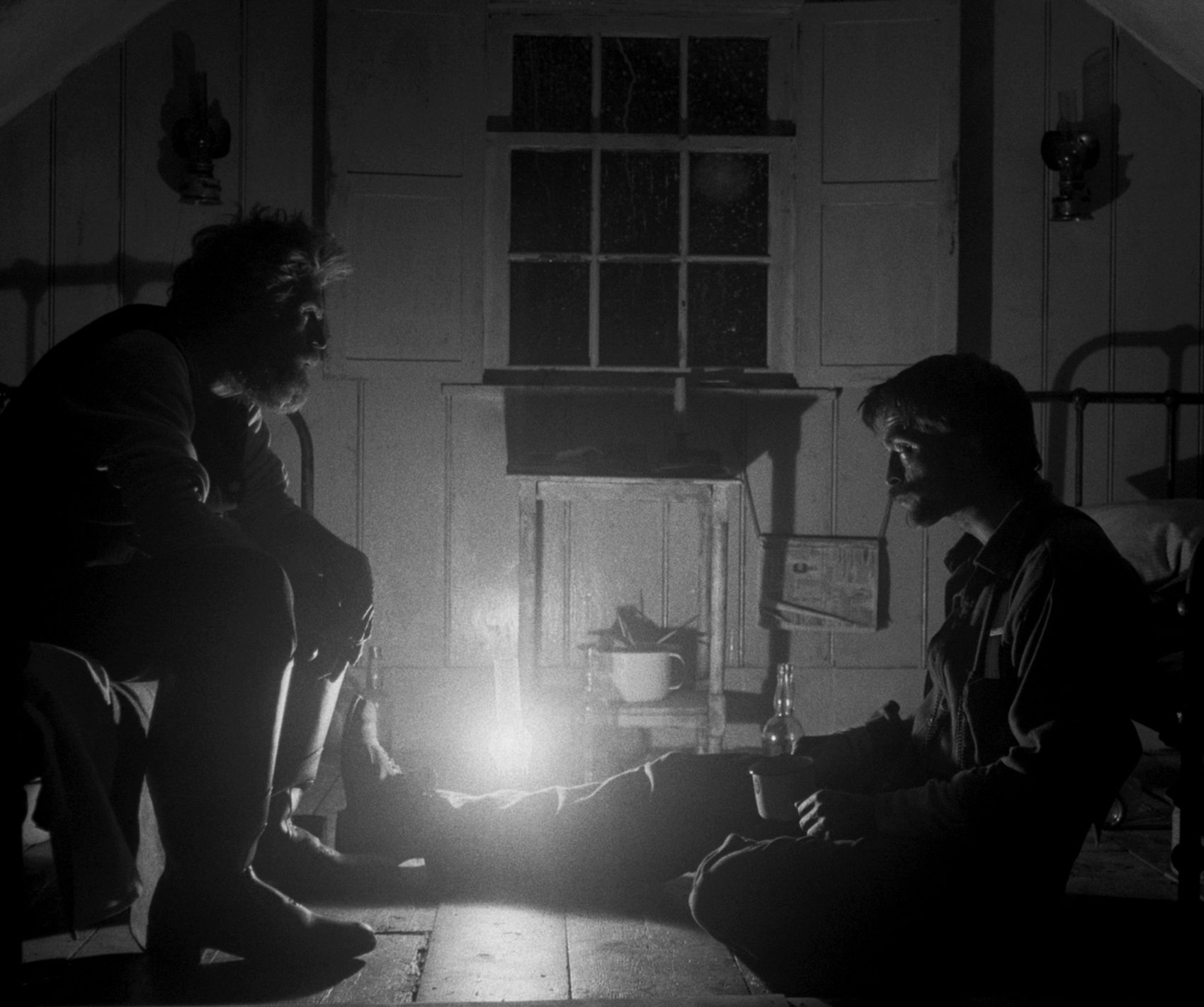
Released in 2019, The Lighthouse was such an unpredictable film that saying it was “jaw-dropping” is a gross understatement. Whenever a film leaves me feeling a strange cocktail of awe and confusion, I wonder: Is this film really TOO smart, or is it just pretending to be smart? Let’s explore this together.
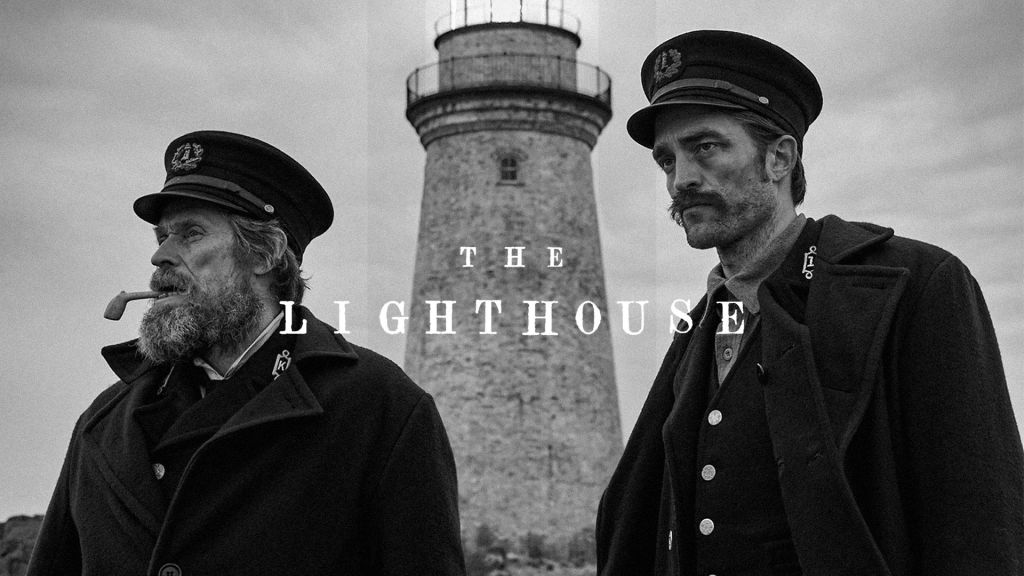
Robert Eggers, who brought fresh blood to horror films with his first film The Witch (2015), came out with his second film The Lighthouse last year. As the uncertainty of 2020 continues, The Lighthouse is a film not to be missed. There is a lot to talk about with this film, which contains a thousand emotions and defines itself as being able to laugh at the suffering of others. According to the film’s cinematographer Jarin Blaschke, Director and screenwriter Robert Eggers, “Atmosphere comes first and everything else comes from it.” And believe me, the atmosphere in this film never seems to run out. The film feels like it came out of another time period – with its old-fashioned box-like 1.19:1 aspect ratio, it squeezes the main two characters side by side, creating a claustrophobic feeling in us. If I were to give a summary of the film: The Lighthouse tells the story of William Dafoe, who plays the experienced lighthouse keeper “Old” (Thomas), and his reluctant assistant “Young” (Ephraim), who gives an incredible performance in this film, Vampire Boy. The dialogues and developments between these two are confusing and worrying at times. Countless theories and meanings can be derived from this film.
Now, we will examine the mythological parts of this film with you.
The Lighthouse was inspired by many legends, fairy tales, and folk tales belonging to seafaring societies. For example, the belief that seagulls carry the souls of dead sailors is a real-life legend that leads to the belief that killing a seabird will bring bad luck. The most famous example of this event is the poem “The Rime of the Ancient Mariner” written by Samuel Taylor Coleridge in 1798. (“The Old Boatman”) The poem tells of a sailor who cursed his ship by killing an albatross that had landed on his boat, and as punishment, the dead bird was forcibly hung around the sailor’s neck by the crew. I don’t know if you’ve ever seen an albatross, but if you have, I’m sure you wouldn’t want it hanging around your neck. I don’t think it’s an attractive necklace at all. In the movie, “The Young Man” is regularly harassed by a one-eyed seagull, and what he does to the seagull seals the change in his fate for the worse. A storm is approaching. “The Young Man” learns that the previous lighthouse keeper went mad and died, and then transformed into a one-eyed man with his head cut off, confirming this legend of the seagull and the dead sailor. Was the old keeper a warning against the evil that lies beneath this lighthouse? Possibly. Of course, there is also the Mermaid character, who we encounter both as a figurine and as a half-human, half-fish. This figure dates back to Medieval Europe and Greek mythology in maritime culture. According to Greek mythology, many sailors were defeated by the Sirens and sent to their mossy graves by the Sirens. These creatures, who tempt men in the sea with their beauty and drag them underwater, represent eroticism and the dangers of sexuality. We can see this connection between sex and death very clearly in the scene where the “Young” is satisfying himself/having a nervous breakdown in the movie.

Of course, we should also mention Prometheus, who shares similarities with the “Young” character. In this myth, Prometheus, a titan, steals fire from the gods and gives it to humanity, and Zeus, who is very angry about this, punishes him. Here, fire represents humanity’s curiosity for knowledge and the dominance it has established over nature. The lighthouse in the movie also stands before us as a representation of forbidden knowledge. Zeus has Prometheus tied to a rock to punish him. An eagle comes and eats his internal organs every day, and Prometheus’ body is renewed every night. The eagle comes again the next morning. A punishment that will last forever. When you watch the movie, you will see this connection clearly.
Finally, let me talk about the similarities of the “Old Man” character to Proteus in Greek mythology. Proteus was one of the first wise men of the sea. The guardian of knowledge and the friend of sea creatures. He is a character who knows everything there is to know but hates sharing this knowledge with others. While Prometheus shares knowledge, Proteus keeps it to himself. The contrast between these two is reflected very clearly and impressively in the film we watched. The dynamic between these two characters has been transferred to the “black and white” screen in a way that will stay in my memory for a long time. The Lighthouse is a film that can be discussed and analyzed for hours. The aesthetics and atmosphere of the film are an experience that must be experienced firsthand. The Lighthouse, which has managed to be the most artistic and visually profound extraordinary film I have come across in the last decade, is a Robert Eggers masterpiece worth watching.

Leave a comment